Wereldwijde Partner voor Siliconenoplossingen

8 producten
Polysilazane resins(organopolysilazanes) are a class of polymers with backbones consisting of alternating silicon and nitrogen atoms, where silicon atoms bear organic substituents. Polysilazane resins feature excellent thermal stability and oxidation resistance, and can be converted into ceramic phases such as Si₃N₄ and SiCN at high temperatures, serving as ceramic precursors. Polysilazane resins are widely applied in ceramic coatings, fiber impregnation and composite matrixes, enabling low-temperature shaping followed by high-temperature ceramization.
| Product | Uiterlijk | Gehalte werkzame stof | Viscositeit (25 °C) | Potloodhardheid | Hechting | Contacthoek met water | Hittebestendigheid (lucht) |
|---|---|---|---|---|---|---|---|
| Fluorine‑Modified Polysilazane SF-NF4401 | Colorless or light yellow clear liquid | — | — | — | — | 100 105° | — |
| Low Viscosity Room Temperature Fast Curing Polysilazane RC001 | Colorless or pale yellow clear liquid | — | 10–40 cSt | — |
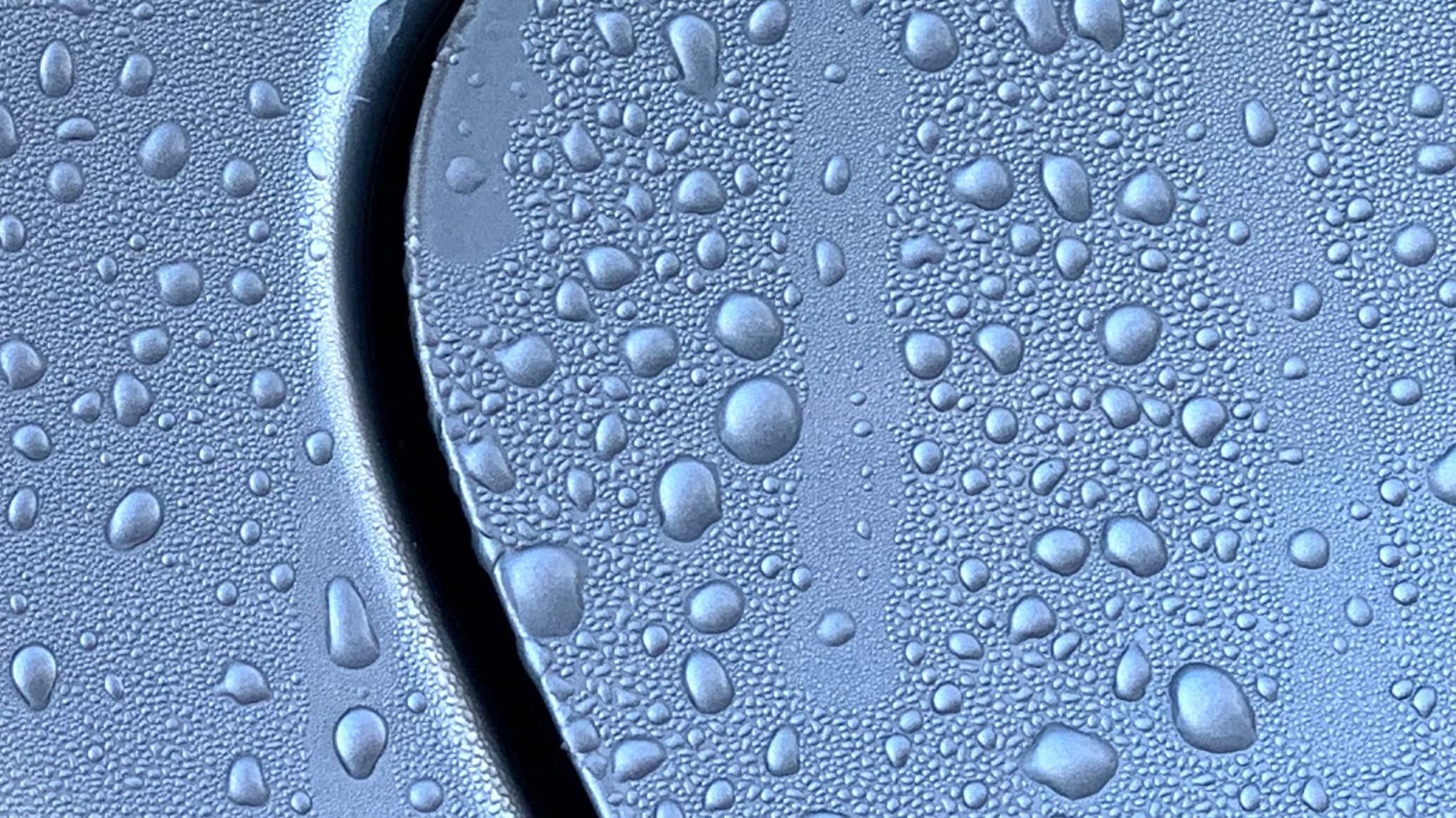
Organopolysilazanes (OPSZ) are polymers whose backbone alternates silicon and nitrogen, with organic groups on silicon. They react with moisture and with hydroxyl groups on a substrate, so they cure into dense, hard, hydrophobic films that bond strongly to metal, glass and plastic. Heated further, they convert into ceramic — SiCN, or silicon nitride — which makes them ceramic precursors as well as coating binders.
The grades differ mainly in how they cure, and the table below compares their typical data.
These cure with ambient moisture, or faster with heat. The fast grades suit production lines; the slow grades give a longer open time.
SF-CB103 organopolysilazane cures only with heat (130–150 °C for 4 hours) and is designed as a binder for hybrid systems.
SF-180VP Vinyl functionalized polysilazane cures by heat, UV light, free radicals or a catalyst. With a ceramic yield of 80–90%, it is the grade for ceramic conversion and for coatings that must survive very high peak temperatures.
Fluorine‑Modified Polysilazane SF-NF4401 adds fluorine for lower surface energy and stronger repellency.
Polysilazanes react with moisture. Use them with good ventilation, close containers immediately after use, and store them in a cool, dry, well-ventilated place.
Common questions include shelf life and storage, ceramisation temperature and mass loss, whether a grade cures in air and what atmosphere pyrolysis needs, the viscosity and solids available, shrinkage after heat treatment, compatibility with carbon fibre and quartz, minimum order quantity and delivery time. Background reading: PHPS, OPSZ and MPSZ polysilazanes compared. For answers on a specific grade, contact our sales team.
| — |
| 95–103° |
| — |
| Low Viscosity Room Temperature Slow Curing Polysilazane SC002 | Colorless or pale yellow clear liquid | 100% | 10–50 cS | 7–8H | — | — | — |
|---|
| Low Viscosity Ultra-Fast Room Temperature Curing Polysilazane RC002 | Colorless or pale yellow clear liquid | — | 80–150 cS | 8–9H | — | — | — |
|---|
| SF-180VP Vinyl functionalized polysilazane | Colorless or light yellow clear liquid | 100% | 30–50 mPa·s | 6H | 5B | 107° | 500 °C |
|---|
| SF-CB103 organopolysilazane | Colorless or light yellow clear liquid | 100% | 30–50 mPa·s | 6H | 5B | — | < 500 °C |
|---|
| SF-RC150 Liquid polysilazane resin | Colorless or light yellow clear liquid | 100% | 30–100 mPa·s | 6–7H | 5B | 110° | < 500 °C |
|---|
| SF-SC150 Oligosilazane | Colorless or light yellow clear liquid | 100% | 30–100 mPa·s | 6H | 5B | 107° | < 500 °C |
|---|